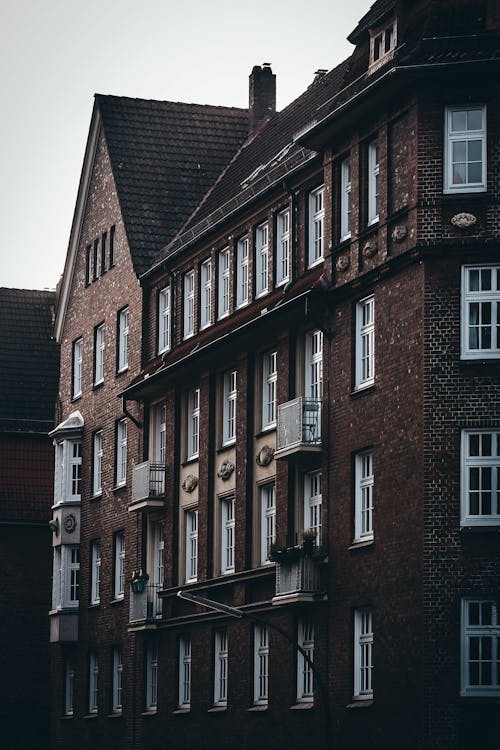
What's different about apartment water damage
Three things set apartment losses apart. First, the people living with the damage usually don't control the building; they report it and wait. Second, several households are affected at once, often in different situations: occupied, vacant, being turned for a new resident, or rented furnished for a short stay. Third, the manager has to keep the property running while the work goes on, with notices, parking, laundry rooms and residents who want answers.
The technical work is the same as anywhere: stop, extract, open, dry, repair. What changes is the planning and communication. A crew used to apartment communities works through the manager and maintenance supervisor, gives residents notice before entering, and keeps a clear record for every unit.
Apartment building types across Northern Virginia
Garden apartments, two to four stories of wood-framed or brick-faced buildings around courtyards and parking, are common from the 1940s through the 1970s in Arlington, Alexandria, Falls Church and older parts of Fairfax County. Their terrace units sit partly below grade, and their original supply and drain lines are often decades old. Mid-rise buildings from the 1960s onward add elevators and stacked risers. Newer podium buildings, with wood-framed floors over a concrete garage and retail level, are common near Metro stations and town centers and bring sprinkler lines, in-unit laundry and in-unit HVAC to every apartment.
Each type moves water differently. Wood-framed garden buildings pass water to the unit below quickly. Concrete buildings hold it on the slab. Podium buildings can carry water from the wood-framed floors down into the garage.
One supply line, four households, and a manager who needs a single plan.
What residents and staff report
- Water through a ceiling light or bathroom fan in a lower unit.
- A work order about wet carpet along a shared kitchen or bathroom wall.
- Water in a terrace-level unit after a storm.
- A wet stairwell or breezeway outside a unit door.
- Damp walls behind a stacked washer and dryer.
- A leak found during a unit turn, with staining that has clearly been there a while.
- A musty smell in a unit or a laundry room.
Common causes in apartment buildings
- Supply lines, angle stops and toilet fill valves, the largest single group of unit leaks.
- In-unit laundry: washer hoses, laundry boxes, and condensation in stacked-unit closets.
- Tank water heaters in unit closets, especially in older garden and mid-rise buildings.
- Drain stacks and kitchen lines, cast iron in older buildings, clogging and backing up into lower units.
- HVAC condensate from in-unit air handlers through humid summers.
- Terrace-level water from window wells, area drains and saturated ground after heavy rain.
- Frozen lines in unheated stairwells, crawl spaces and empty units during cold snaps.
- Sprinkler heads struck by residents or movers.
Several units wet? Pricing comes unit by unit, before any work.
Call for Upfront PricingNotifying residents and owners
Residents want to know three things: what happened, when someone will come, and whether they should move belongings. A short written notice to every affected unit, with the crew's expected arrival window and a maintenance contact, heads off most follow-up calls. For occupied units, follow your normal entry-notice procedures, and speak with residents directly where an active leak means someone needs to get in quickly.
If units are individually owned and rented out, the unit owner needs to hear about it as well as the tenant. Management should let the property owner's insurer contact know. Residents: contact your own insurer and read your policy.
How the work is organized
- Kickoff with the manager and maintenance lead: source, valves, affected units, occupancy, access and parking.
- Unit-by-unit survey with meters and thermal imaging, including shared walls, stairwells and laundry rooms.
- Extraction and protection of residents' belongings, with furniture moved and blocked up.
- Removal of wet ceiling drywall, baseboards, pad and insulation only where readings require.
- Drying in every affected unit, sized to each space, with equipment placed so residents can still use the rest of the unit where possible.
- Daily readings and a short status update to the manager.
- Unit records: readings, photographs and the work performed for each unit.
- Repairs scheduled around occupancy and turns.
Drying equipment runs day and night and is noisy. Whether a resident stays in the unit during drying is a decision for the manager and the resident; the crew will explain what the work involves and how long it's expected to run.
What affects time and cost
The number of units, the construction, whether the water was clean or from a drain line, occupancy, and access. A single supply-line leak into one unit below may need several days of drying. A stack backup through a column of garden units, or a sprinkler release, takes longer. Managers receive pricing for each unit and shared space before work begins, with no hidden fees.
Afterward: reducing repeat losses
- Replace supply lines and angle stops during unit turns.
- Put water heaters on a replacement schedule, with pans and sensors.
- Clean condensate lines each spring.
- In older buildings, keep drain stacks on a camera-inspection and cleaning schedule.
- Check terrace-level window wells and area drains before storm season.
- Keep heat on in empty units and stairwells through the winter.
Related services
- Condo and shared buildings
- High-rise water damage
- Rental properties
- Vacant units
- Sewage backup cleanup
- Contents pack-out
Apartment water damage: common questions
Can one crew handle all the affected apartments?
Yes. For managers that's usually simplest: one plan, one point of contact, and one set of records with a section for each unit.
Do residents have to leave during drying?
That's a decision for the manager and the resident, not the crew. Equipment runs around the clock and is noisy, and some rooms may be partly opened up. The crew will explain what's involved and how long it should take.
How do you get into occupied units?
Through management, following its entry procedures and notice to residents. For an active leak, maintenance usually arranges access immediately.
A resident's belongings got wet. What happens to them?
The crew moves and protects them during the work, and can pack out and clean items if the resident arranges it. Residents should contact their own insurer about their belongings.
Why do terrace-level units get water after storms?
They sit partly below grade, beside window wells, area drains and walkways. Heavy rain on saturated clay soil pushes water in through windows, doors and foundation walls.
The building is older. Does that change anything?
Often. Cast-iron drains, galvanized supply lines and older water heaters fail differently from newer materials, and past renovations can hide water paths. The crew allows for that during the survey.
Can drying fit around a unit turn?
Yes. An empty unit is often quicker to dry, and repairs can be folded into the turn so the unit is ready for the next resident.
What documentation do managers get?
A record for each affected unit and shared space: readings over time, photographs and a description of the work performed, which can be shared with owners and their insurers.